
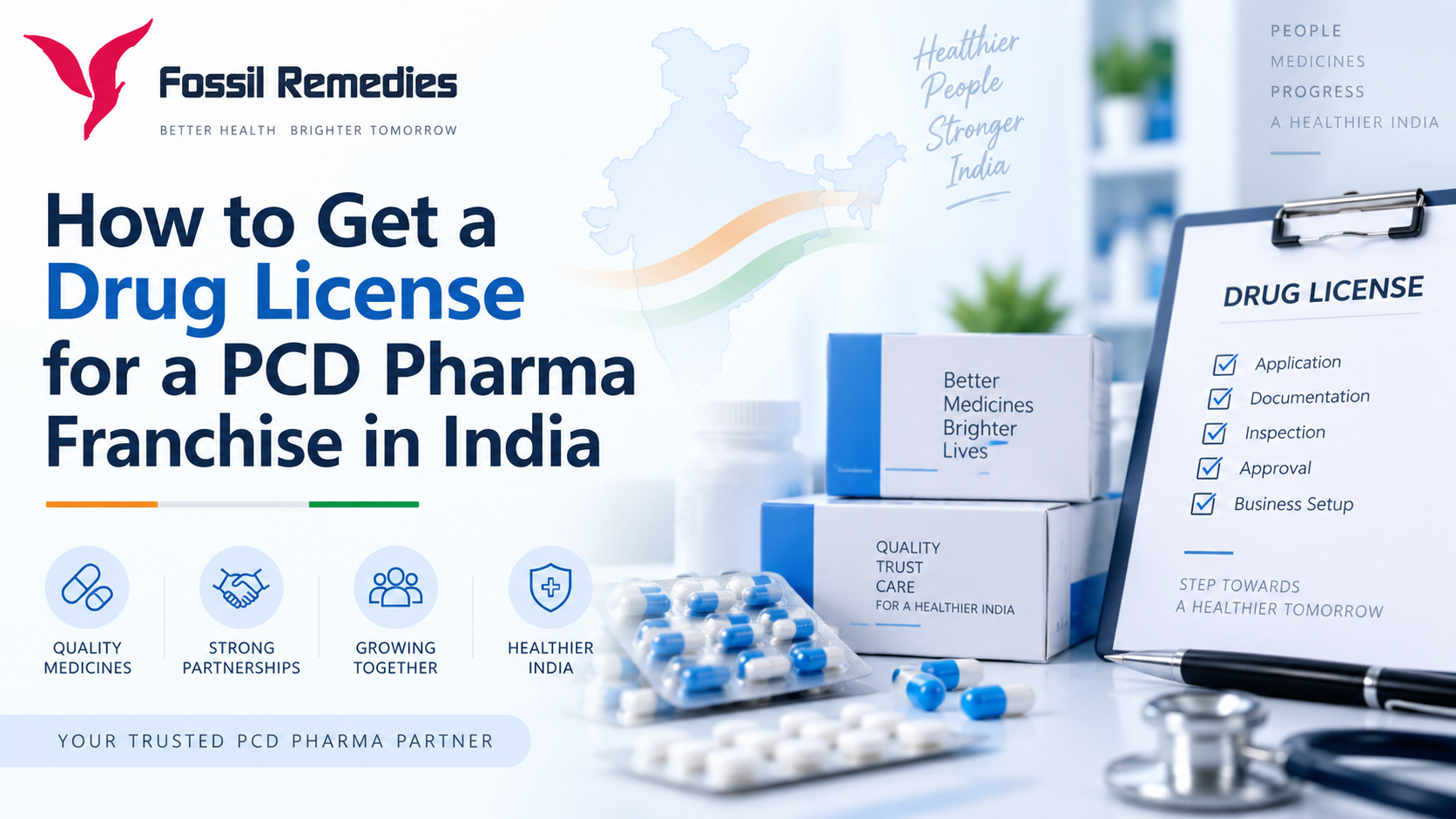
Starting a pharmaceutical franchise can be a promising business opportunity, but it also comes with important regulatory responsibilities. One of the first things an entrepreneur needs to understand is the drug licensing requirement.
In India, the manufacture, sale and distribution of medicines are regulated under the applicable drug laws and rules. For most entrepreneurs planning to operate a PCD Pharma Franchise, obtaining the appropriate drug sale licence is therefore an important part of setting up the business legally.
The exact licence and procedure can vary according to the type of medicines you intend to handle and the state or union territory where your business operates. This guide explains the process in practical terms.
Why Is a Drug License Important for a PCD Pharma Franchise?
A drug licence is an official authorisation that allows a business to carry out specified activities involving pharmaceutical products. Depending on the licence, these activities can include selling, stocking, exhibiting or offering medicines for sale, and distributing them.
For someone working with a PCD Pharma Company, the licence is more than paperwork. It helps establish that medicines are being handled through a regulated distribution channel.
The Central Drugs Standard Control Organization (CDSCO) explains that regulation of the manufacture, sale and distribution of drugs is primarily handled by state authorities, while central authorities perform functions such as new-drug approval, setting standards and regulating imported drugs.
Step 1: Determine the Type of Drug License You Need
Before applying, understand what activities your PCD business will actually perform.
A PCD franchisee commonly operates as a distributor or wholesaler rather than a manufacturer. Under the Drugs Rules, different licence forms apply depending on the category of medicines and whether they are sold at retail or wholesale.
For example, Form 20B relates to wholesale sale, stocking or distribution of drugs other than specified Schedule C, C(1) and X drugs. Form 21B covers wholesale activities involving specified Schedule C and C(1) drugs, excluding Schedule X.
The licence required for your business can therefore depend on your product portfolio. Do not simply apply for a particular licence because another franchisee uses it. Confirm the applicable category with your State Drug Control authority.
Step 2: Establish Suitable Business Premises
Your business should operate from premises that satisfy the requirements applicable to the licence you are seeking.
Plan your storage arrangements carefully, particularly if you intend to stock products requiring specific storage conditions. The licensing authority may inspect the premises as part of its regulatory process.
Another important point is location. Under the Drugs Rules, when drugs are sold or stocked for sale at more than one place, separate applications and licences are generally required for each place.
Step 3: Arrange a Competent Person
Wholesale drug licences can involve requirements relating to supervision by a competent person. The eligibility and documentation required should be checked with the relevant licensing authority.
For example, Form 21B specifically provides for wholesale sale under the personal supervision of a competent person.
Before submitting an application, make sure the person proposed for this role meets the applicable requirements and that supporting qualification or experience documents are available.
Step 4: Prepare the Required Documents
Documentation can vary by state, business structure and licence category. Applicants may be asked to provide documents relating to the constitution of the business, premises, authorised or competent person, and other information required by the licensing authority.
Instead of relying on a generic online checklist, check the current requirements published by your State Drug Control authority. This can prevent unnecessary delays caused by incomplete or outdated documentation.
Step 5: Submit Your Application to the Appropriate Authority
Applications for licences concerning the sale and distribution of medicines are generally handled by the relevant state licensing authorities.
CDSCO provides links to State Drug Control organisations across India. Since procedures and application systems can differ between jurisdictions, applicants should follow the process specified for the state or union territory in which their premises are located.
Complete the prescribed application carefully, attach the required documents and pay the applicable government fee.
Step 6: Be Prepared for Verification and Inspection
Submitting an application does not automatically mean that a licence will be granted.
The licensing authority may review the documents, verify the competent person and examine whether the premises and proposed operations meet applicable requirements. If an inspection is required, your storage facilities and business arrangements should be ready for verification.
Any queries raised by the authority should be answered accurately and promptly.
Step 7: Follow Licence Conditions After Approval
Getting the licence is only the beginning of compliance.
For example, the conditions attached to wholesale licences require compliance with applicable drug laws and include requirements concerning the purchase and sale of medicines through appropriately licensed channels. Licences must also be displayed as prescribed.
Businesses should maintain proper purchase and sales documentation and stay informed about regulatory changes that affect their operations.
Choosing the Right PCD Pharma Company in India
A drug licence provides the regulatory foundation for your distribution business, but the company you partner with also matters. When evaluating a PCD Pharma Company in India, consider factors such as its product range, manufacturing and quality arrangements, documentation, supply consistency, business transparency and franchise support.
works with entrepreneurs interested in building their presence in the pharmaceutical market through the PCD franchise model. Prospective franchise partners should independently verify the licences and other regulatory requirements applicable to their own location and business activities before beginning operations.
Conclusion
Obtaining the appropriate drug licence is an essential step when establishing a PCD Pharma Franchise in India. The process starts with identifying the correct licence category, arranging suitable premises and qualified personnel where required, preparing documentation, and applying through the appropriate licensing authority.
Most importantly, regulatory requirements can differ according to the medicines involved and the state in which you operate. Always check the latest requirements with the relevant State Drug Control authority before submitting an application. Once the regulatory foundation is in place, partnering with an established PCD Pharma Company such as Fossil Remedies can help you move forward with your pharmaceutical franchise plans.